
Better than an MRI: TSM at the AGPA in NYC
Oh My, This Is Different
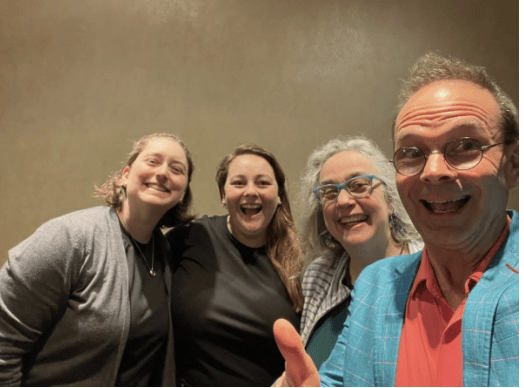
“It seemed chaotic and there was a lot going on.” This was the feedback from the newly formed TSM team who accompanied me to New York City to help with the TSM workshop at the American Group Psychotherapy Association (AGPA) conference in March of this year.
“Yes, the mind is messy and often chaotic.” I realized that after directing so many TSM psychodramas where the intrapsychic world is made visible, I had forgotten how the scene might appear to eyes seeing it for the first time.
In a TSM psychodrama, internal roles are enacted, auxiliaries step in and out, the body double speaks to ground the protagonist, memories are navigated, emotions surface, and protective defenses can engage. To someone new to the process, it can look like a whirlwind of activity. Yet beneath the surface of the drama is a method that is highly precise and intentional.
No Worries, There’s a Map
The Therapeutic Spiral Model Psychodrama is not chaos. It is organization—and transformation.
Each role placed on the stage represents a part of the psyche: strengths, defenses, wounds, internalized voices, and unmet needs. What initially looks like disorder slowly reveals a clear map of the trauma survivor’s internal role atom—the TSIRA. The stage becomes a living diagram of the mind, something no MRI could ever show. We are not looking at blood flow or neural pathways; we are witnessing meaning, relationships between parts of self, the emotional logic developed to survive trauma, and the organization required for post-traumatic growth.
As the drama unfolded, the apparent chaos began to organize itself. Strength roles anchored the work. Containment structures held the experience safely. The protagonist began calling on her various parts to help her—perhaps for the first time seeing how the different aspects of her internal world interacted. What once felt overwhelming became understandable. The parts became organized.
Making the Invisible, Visible
The mind that began in chaos ended with an orderly picture: the protagonist standing in the center, flanked on both sides by her strengths and integrated parts, all embodied by the participants. Someone commented that the group looked like a larger-than-life butterfly—the ultimate symbol of transformation.
For the new members of the TSM team, witnessing this process was an initiation. What first appeared confusing gradually made sense as the careful architecture of the model became visible—an architecture designed to help people reclaim parts of themselves that had been hidden, silenced, or fragmented by trauma.
Perhaps that is one of the most beautiful aspects of TSM. It allows us to see the invisible structures of the psyche and reorganize them in ways that restore dignity, safety, and connection.
In that sense, the TSM psychodrama stage really can be better than an MRI—it lets us see the living, breathing story of the human mind.